A later prehistoric settlement and metalworking site at Seafield West, near Inverness, Highland
DOI:
https://doi.org/10.9750/issn.2056-7421.2011.47.1-44Keywords:
Postholes, Cropmarks, Charcoal, Ditches, Slags, Cropmark, Sword, Metalworking, Palisaded Enclosure, Logboat Burial, Copperalloy Brooch, Settlement, Hearth, IronworkingAbstract
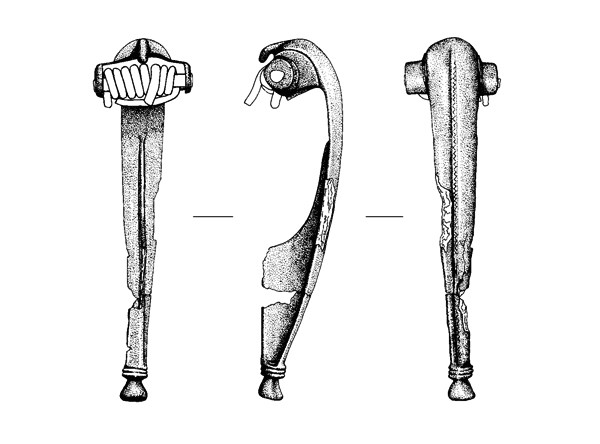
Construction in 1996 at a major retail development site close to Inverness, Highland (NGR: NH 694 445) resulted in the destruction of two known cropmark sites. One set of cropmarks was found to be associated with a Bronze Age log-boat burial site and the results of the ensuing excavation are published elsewhere (Cressey & Sheridan 2003). The excavation of a second area of cropmarks forms the subject of this publication. The archaeological remains consisted of a series of negative features, post-holes and annular ditches which form parts of at least nine separate structures of a later prehistoric unenclosed settlement. A mould fragment indicated Late Bronze Age sword production in the vicinity. A palisaded enclosure produced a copper-alloy brooch that is a rare find for the region. Evidence of copper-alloy objects and metalworking from a smelting hearth and slags show that the occupants were of some status. Some of the structural and artefactual evidence compellingly points to an in situ ironworking workshop. A large cache of smithing charcoal found in association with a smelting hearth was radiocarbon dated to 180BC–AD70 and represents one of the few dated in situ Iron Age ironworking episodes in Scotland.
Downloads
Downloads
Published
Issue
Section
Categories
License
Copyright (c) 2011 Michael Cressey, Sue Anderson and the individual contributors

This work is licensed under a Creative Commons Attribution-NonCommercial 4.0 International License.